
OnlyFans gives subscribers no built-in way to browse free accounts, so discovery happens outside the platform entirely. This guide explains why that search gap exists, how ranking sites and social channels fill it, and how to verify a free page before you trust a link. It also covers privacy measures, price changes, and the checks that separate a genuine creator from an impersonator. BestOnlyFans, along with other ranking projects, exists precisely because the platform itself offers no directory.
Why OnlyFans Built No Native Discovery Tools
OnlyFans launched as a subscription platform where creators brought their own audience. The model assumed fans arrived from somewhere else, usually a social media profile, and then subscribed directly. A searchable directory would have pushed the platform toward a different business altogether, one closer to a content marketplace than a subscription tool.
There are practical reasons too. Moderation at scale is expensive, and a browsable index of adult pages would multiply that burden many times over. Payment processors also apply pressure, and platforms in this space tend to avoid anything that resembles an open catalogue. The result is a deliberate blank space where a search bar would normally sit.
That blank space has consequences for subscribers. Without an internal feed, you cannot filter by price, activity level, or content type. You cannot sort free pages to the top or check whether an account is still posting. Every one of those functions has migrated to external sites, and each external site carries its own reliability problems.
Before trusting any external listing, confirm the page opens inside the OnlyFans domain itself. A link that redirects through three different domains before reaching the platform is a warning sign, not a shortcut.
How Third-Party Ranking Sites Fill the Discovery Gap
Ranking sites emerged to solve a problem the platform declined to solve. They compile lists of accounts, often filtered by price, category, or region, and they publish that information in a format subscribers can actually browse. The best of them apply consistent verification standards before listing a page.
Verification standards vary widely, and that variation is the main risk for subscribers. A site that checks each listing manually produces different results from one that scrapes links automatically. Manual checks are slower and cover fewer accounts, but the listings that survive them tend to be far more accurate. This is where BestOnlyFans positions itself, as a ranking project with a stated methodology rather than an automated aggregator.
It helps to compare what ranking sites actually offer against what the platform provides natively.
| Feature | BestOnlyFans Methodology | Platform Native Tools |
|---|---|---|
| Free page filtering | Available through curated category lists | Absent entirely |
| Price verification | Manually checked at review time | Automatic once you reach the page |
| Activity tracking | Updated on a review cycle | Real-time, but only after subscribing |
| Safety indicators | Community flags and editorial notes | Official verification badge only |
The trade-off is straightforward. Ranking sites give you breadth and filtering that the platform does not offer, but they are always working from a snapshot. A page that was free and active last month may have changed by the time you click through. Treat every listing as a starting point for your own check, not as a guarantee.
Social Media Channels as Free Account Discovery Paths
Most creators promote their pages on social platforms because that is where their existing audience lives. For subscribers, those same platforms double as discovery channels, though each one presents a different set of verification problems.

- Twitter/X allows direct links to pages, but bot accounts and impersonators are common and easy to clone.
- Reddit offers niche communities with active moderation, though moderation quality varies sharply between subreddits.
- TikTok prohibits direct promotion in most cases, so creators use coded references that are hard to verify.
- Discord servers provide curated recommendations, but they are insular and often driven by the server owner’s interests.
The table below compares how each channel handles discovery and how difficult verification becomes in practice.
| Platform | Discovery Mechanism | Verification Difficulty |
|---|---|---|
| Twitter/X | Hashtag and keyword search | High |
| Subreddit curation and pinned threads | Medium | |
| TikTok | Algorithmic suggestion via coded language | Very high |
A practical rule applies across all three. The more indirect the path from a post to the actual page, the more opportunity exists for someone to insert a fake link along the way. Direct links from a creator’s own verified profile are the only ones worth treating as reliable.
Verifying Authenticity Before Following External Links
Impersonation schemes usually rely on subscribers skipping one step, so working through the full sequence closes most of the gaps. The protocol below takes a few minutes per account and prevents the majority of common problems.
- Confirm the creator verification badge on the OnlyFans page itself, not on the promotional post.
- Compare the handle across every platform where the creator claims a presence, checking for small character swaps.
- Examine whether the content style stays coherent across posts rather than shifting abruptly.
- Review the join date and posting history for gaps or sudden changes in tone.
- Search for impersonation reports mentioning the same handle or display name.
Two details catch most fakes. Impersonators rarely maintain consistent handles across platforms because they are working quickly. Stolen content usually appears in bursts rather than as a steady posting pattern. Either signal on its own warrants caution, and both together should end your interest in the account.
It also helps to understand what a legitimate free page actually is. Free pages set their subscription price to $0 and earn through pay-per-view messages and tips instead. That model is normal and widespread. Paid chat on such pages commonly runs $3 to $5 per message, and PPV unlocks can reach $50, which is how the economics work without a subscription fee.
Community Forums and Their Role in Vetting Free Pages
Subscriber communities do a large share of the verification work that ranking sites cannot scale. Threads dedicated to reviews, warnings, and scam reports create a running record that individual subscribers can consult before clicking anything. The information is imperfect, but it is often faster than any editorial process.
- Discovery threads surface new pages, while review threads assess ones already known.
- Older recommendations lose relevance quickly because pricing and activity change over time.
- Some posters have incentives to promote specific accounts, which affects how honest a recommendation is.
- Collective reporting of scam accounts works well when moderators act on it consistently.
The main limitation is accountability. Anyone can post a recommendation, and there is rarely a mechanism to verify that the poster actually subscribed. Cross-referencing forum claims against the creator’s own profile remains the only dependable approach. If a thread praises a page that has no verifiable social presence elsewhere, treat the recommendation as unconfirmed.
Protecting Personal Data During External Discovery
Leaving the platform to search for pages means leaving its privacy protections behind. External sites, redirect chains, and promotional posts all create opportunities for data collection that would not exist inside the app.
- Use a dedicated email address for all OnlyFans correspondence and account creation.
- Browse through a VPN so your browsing history is not tied to your home connection.
- Keep a separate payment card for platform transactions rather than a primary card.
- Avoid link shorteners, which hide the final destination until after the click.
- Refuse any request to download files or install software to view a page.
If a promotional post asks you to install an app, scan a QR code, or enter your OnlyFans credentials on a non-OnlyFans domain, stop. There is no legitimate discovery process that requires any of those steps.
When External Discovery Leads to Changed Pricing
A creator may test a zero-dollar model, build a subscriber base, then move to a paid tier. When that happens, the platform’s own rules determine what you experience next, and understanding them prevents surprises.
Your existing access continues until the paid period you already purchased ends, so you are never locked into a new higher price without consent. If you subscribed while the page was free, a later switch to paid simply means you decide whether the new price is worth it.
- Subscribe immediately when you find a genuinely free page to lock the zero-dollar status.
- Enable notifications so a pricing or subscription change reaches you before renewal.
- Schedule a periodic check of the page status, especially for accounts you follow passively.
Pricing context helps here. Paid subscriptions on the platform range from $4.99 at the minimum to $49.99 at the maximum, with most paid pages clustering between $5 and $10. Promotional first months can dip below the standard minimum, such as a $3 first month, but base prices cannot go below $4.99. If you see a permanent base price advertised under that figure, the listing is inaccurate.
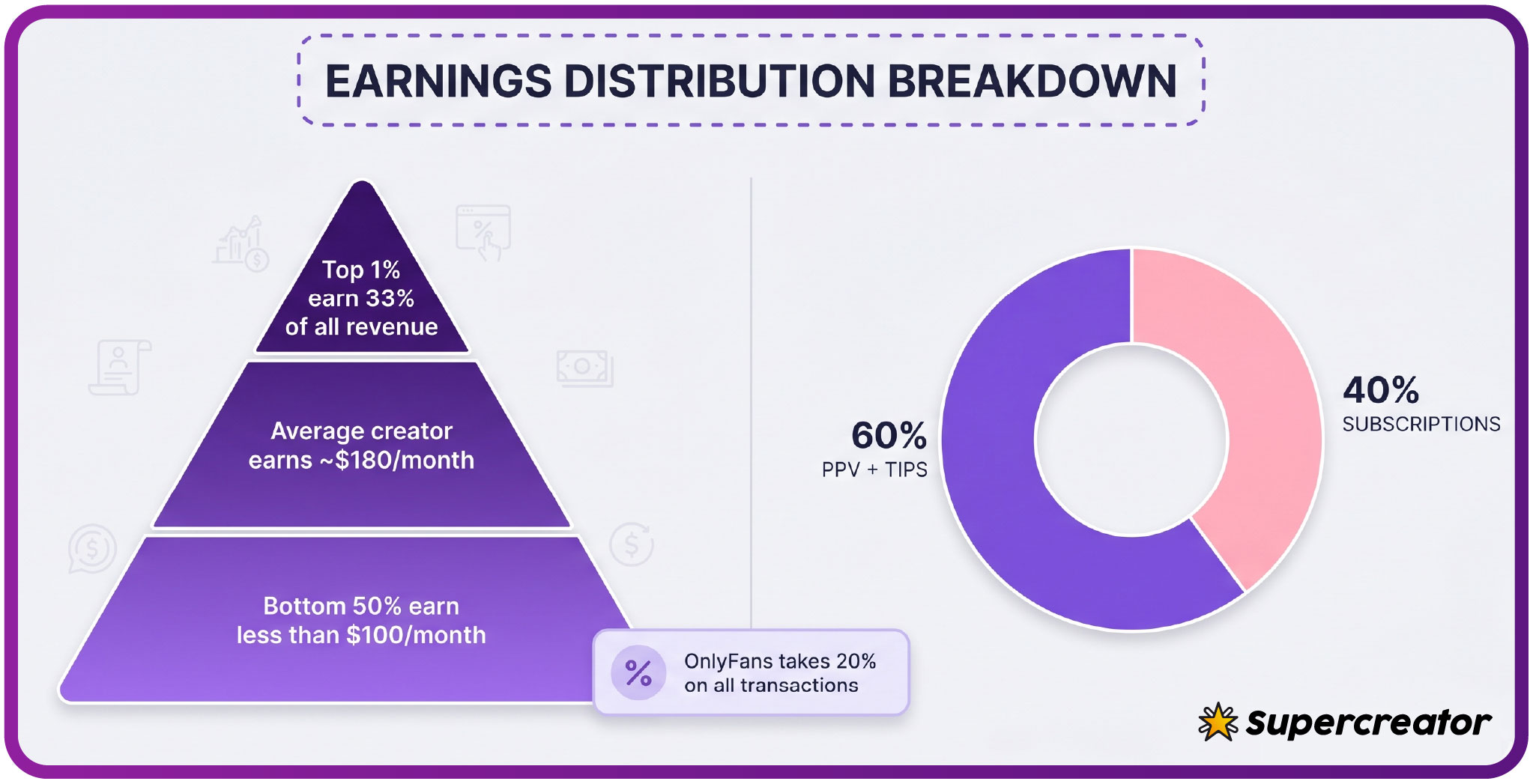
The platform takes a 20% fee on everything, and the creator keeps 80%. That split applies to subscriptions, tips, and PPV unlocks alike, so a $10 subscription delivers $8 to the creator. A card verification hold of $0.10 may appear when you add a payment method, and it is refunded within days.
For anyone comparing options across multiple channels, a consolidated list is faster than checking each platform separately. Curated free onlyfans creator pages can shorten the search, provided you apply the same verification steps to every listing regardless of where you found it.
FAQ
Is it safe to click OnlyFans links from social media?
It is safe when the link comes from a creator’s own verified profile and points directly to the platform domain. Risk rises sharply with links from third-party accounts, shortened URLs, or posts that redirect through multiple sites. Check the destination before entering any credentials.
How do I know a free page promotion is legitimate?
Confirm the verification badge on the OnlyFans page, compare handles across platforms, and review the posting history for consistency. If the promotion asks for payment outside the platform or requests your login details on another site, it is not legitimate.
Why doesn’t OnlyFans have a search function for free accounts?
The platform was built around creators bringing their own audiences, not around browsing. Moderation costs and payment processor requirements also discourage an open catalogue. That gap is why external ranking sites and community forums exist at all.
Can a free page I found externally change to paid later?
Yes. A creator can switch a free page to a paid tier at any time, and base prices must stay at or above $4.99. When the price rises, auto-renew stops and your current access lasts until the period you paid for ends.